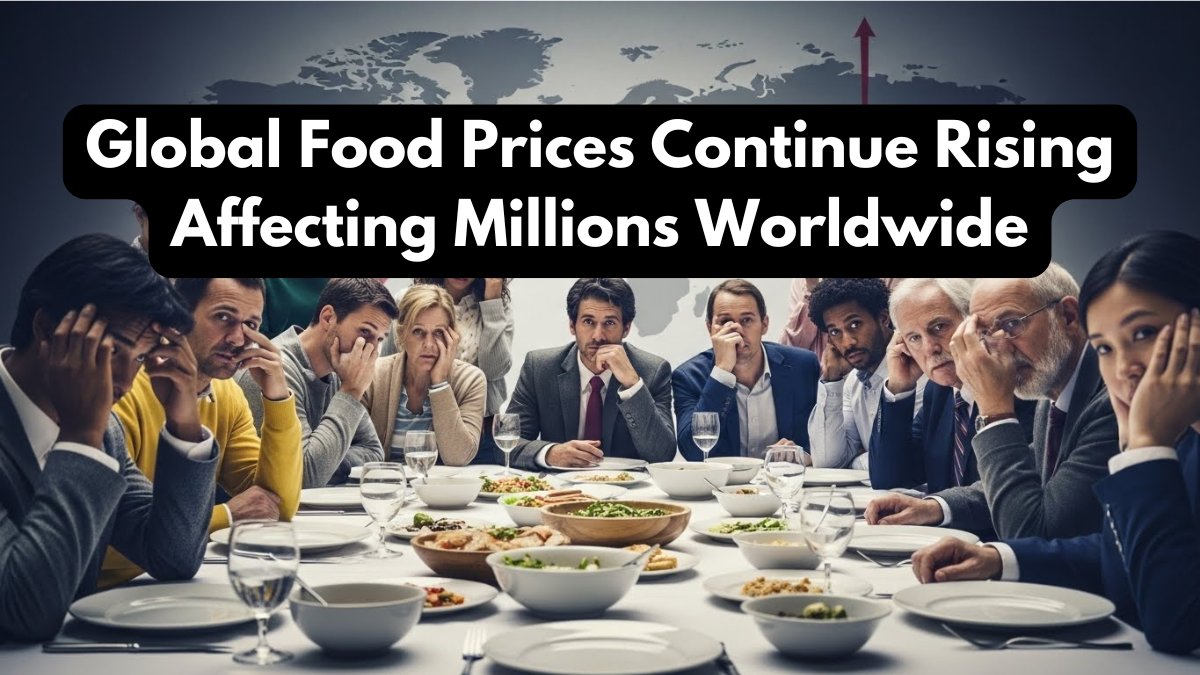
Across the world, global food prices continue to rise, creating widespread concern for families, governments, and international organizations. What was once considered a temporary problem has now grown into a long-term economic and humanitarian challenge. As inflation increases and essential goods become more expensive, millions of people find it harder to afford basic meals. At the same time, broken supply chains, climate disruptions, geopolitical issues, and economic instability are contributing to constant food cost fluctuations. The continued rise in global food prices is not only affecting shopping budgets; it is influencing health, nutrition, poverty levels, and social stability.
Why Global Food Prices Are Increasing So Rapidly
There are multiple reasons why global food prices continue to rise at such an alarming pace. One of the biggest contributors is inflation, which affects the cost of production, transportation, labor, and storage. When everything around food production becomes more expensive, the final price on supermarket shelves increases as well. Farmers face higher fertilizer costs, fuel prices continue to rise, and logistics become more expensive, all directly impacting global food prices.
Another major factor is the ongoing disruption in supply chains. Natural disasters, international conflicts, shipping delays, and global crises have slowed down the transportation of essential food products. When supply is limited but demand remains high, prices automatically increase. Additionally, unpredictable weather patterns, droughts, floods, and extreme climate conditions reduce agricultural output, worsening the situation. These combined pressures mean that global food prices are unlikely to return to previous levels anytime soon.
Impact of Rising Global Food Prices on Everyday Life
The continuous increase in global food prices affects more than just supermarket bills. It directly impacts nutrition, living standards, and economic stability. Families with limited income struggle to maintain balanced diets when the cost of essential foods keeps rising. As inflation grows, households are forced to sacrifice other needs just to afford meals. In developing nations, this problem is even more serious, as high food costs increase hunger and malnutrition rates.
Businesses are also affected. Restaurants, food manufacturers, and retailers are forced to increase product prices to survive. When supply chains become unstable, businesses face delays, shortages, and financial losses. Government budgets come under pressure as nations need to increase funding for food support programs. The rising global food prices problem is therefore a complex economic and social challenge affecting every level of society.
Below is a helpful table explaining how rising food costs influence different sectors:
| Area Impacted | Effect of Rising Global Food Prices |
|---|---|
| Households | Higher living costs and reduced nutrition |
| Inflation | Increases national economic pressure |
| Supply Chains | Causes delays and instability |
| Businesses | Raises operational and product costs |
| Governments | Requires expanded support programs |
This clearly shows how inflation and weak supply chains keep pushing global food prices higher, affecting millions worldwide.
Role of Inflation and Supply Chains in Food Price Increases
Understanding the deeper connection between inflation and global food prices is important. When inflation rises, the value of money decreases, meaning consumers must spend more to buy the same amount of food. Governments sometimes attempt to control this through subsidies, but long-term inflation can still push prices upward. Producers, transporters, and sellers all pass additional costs to consumers, making essential groceries more expensive.
Meanwhile, fragile supply chains make the situation even worse. Food travels through multiple stages before reaching consumers: farming, processing, packaging, transportation, warehousing, and retail distribution. If any stage faces disruption, shortages occur and global food prices rise again. Unexpected borders closures, shipping container shortages, rising fuel prices, or political conflicts can quickly break supply systems. These ongoing disruptions explain why food affordability has become one of the world’s biggest economic concerns.
Humanitarian and Future Consequences of Rising Food Prices
The rise in global food prices is not just an economic discussion; it is a humanitarian issue. When food becomes too expensive, hunger increases, inequality grows, and social unrest becomes more likely. Vulnerable populations, including children, elderly individuals, and low-income families, suffer the most. In many regions, rising inflation and unstable supply chains push millions closer to poverty.
If this trend continues, the world may face long-term problems such as food insecurity, weaker workforce productivity, health complications due to poor diet, and increased dependence on aid programs. Nations must strengthen local farming, stabilize supply chains, control inflation, and improve global cooperation to manage the crisis. Without strong strategies, global food prices will continue rising, affecting future generations even more deeply.
Conclusion
The continuous rise in global food prices has become one of the most serious challenges of the modern world. With inflation increasing and fragile supply chains facing repeated disruptions, food costs continue to burden families, businesses, and governments. This issue is not only economic; it directly affects health, survival, and social stability. Addressing the challenge requires strong planning, international cooperation, sustainable agriculture, and efficient food systems. Only then can the world hope to control global food prices and ensure food security for everyone.
FAQs
Why are global food prices increasing so fast?
global food prices are rising due to inflation, higher production costs, climate issues, and disrupted supply chains.
How does inflation affect food prices?
inflation increases production, transportation, and labor costs, which leads to higher food prices.
What role do supply chains play in food price increases?
supply chains affect availability and delivery. When supply chains are disrupted, shortages occur and prices rise further.
Who suffers the most from rising global food prices?
Low-income families, developing nations, and vulnerable populations suffer the most when global food prices increase.
Click here to know more.