The healthcare industry is undergoing a massive transformation in 2026, and AI health monitoring is at the center of this change. Traditionally, people relied on wearable devices like smartwatches or fitness bands to track health metrics, but new innovations are making it possible to monitor wellness without physical gadgets. Advanced health tracking AI systems now use smartphone sensors, computer vision, and predictive algorithms to analyze daily habits and provide personalized health insights. With rapid advancements in medical technology, individuals can monitor their well-being more conveniently and discreetly than ever before, making proactive healthcare accessible to a wider audience.
As awareness about preventive health grows, many users prefer solutions that integrate seamlessly into their daily routines. AI health monitoring platforms are designed to analyze patterns such as sleep cycles, voice tone, posture, and even typing behavior to identify early warning signs of health issues. These tools rely on health tracking AI to interpret data in real time, offering recommendations that support physical and mental wellness. By leveraging cutting-edge medical technology, these systems eliminate the need for constant wearable usage while still delivering accurate health insights.
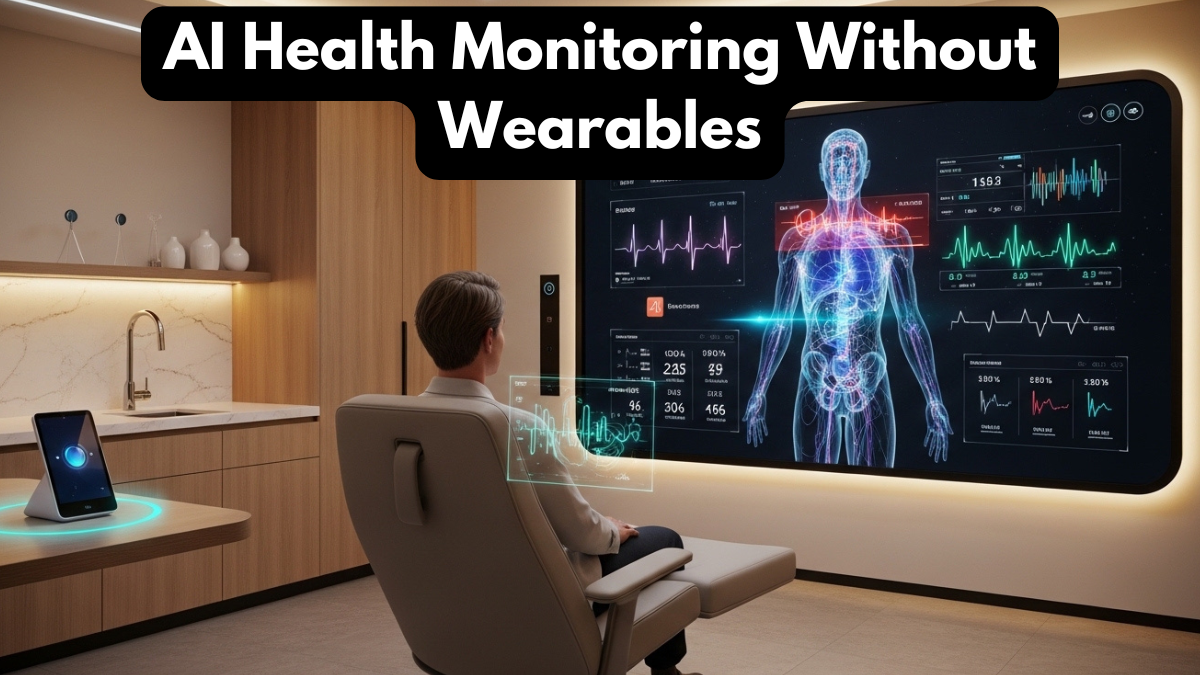
How AI Health Monitoring Works Without Wearables
Modern AI health monitoring relies on a combination of software intelligence and existing digital devices. Smartphones, laptops, and smart home systems can collect valuable data through cameras, microphones, and motion sensors. Using advanced health tracking AI, these devices analyze behaviors such as breathing patterns, facial expressions, or activity levels to detect changes that may indicate stress or fatigue. The integration of medical technology ensures that these insights are backed by scientific models, improving reliability and accuracy.
Some of the key technologies involved include:
• Computer vision for posture and movement analysis
• Voice recognition powered by health tracking AI to detect emotional or respiratory patterns
• AI-driven sleep analysis using environmental sensors
• Predictive analytics developed through modern medical technology
These innovations demonstrate how AI health monitoring is shifting from hardware-focused solutions to software-driven ecosystems. As health tracking AI becomes more sophisticated, users gain access to deeper health insights without needing to wear devices throughout the day.
Benefits of Health Tracking AI for Everyday Wellness
One of the biggest advantages of AI health monitoring without wearables is convenience. Many people find wearable devices uncomfortable or forget to use them consistently, which can reduce the accuracy of collected data. With advanced health tracking AI, monitoring happens passively through existing devices, making it easier to maintain long-term health awareness. Additionally, evolving medical technology enables these systems to identify patterns that might go unnoticed by traditional methods.
Key benefits include:
• Continuous monitoring without physical devices
• Personalized health recommendations based on real-time analysis
• Improved early detection of potential health concerns
• Greater accessibility thanks to software-based medical technology
By combining behavioral analysis with AI-driven predictions, AI health monitoring empowers users to make healthier choices daily. The integration of health tracking AI into smartphones and home environments ensures that health insights remain consistent, while advancements in medical technology make these tools more reliable and user-friendly.
Comparison of AI Health Monitoring Methods
The shift toward wearable-free solutions has introduced various approaches to AI health monitoring. The table below highlights common methods and their advantages:
| Monitoring Method | Data Source | Key Benefit | Role of Health Tracking AI |
|---|---|---|---|
| Smartphone-Based Analysis | Camera & sensors | Easy accessibility | Detects behavioral patterns |
| Voice Monitoring Systems | Microphone input | Stress and mood insights | Analyzes speech tone and rhythm |
| Smart Home Sensors | Environmental data | Passive tracking | Identifies sleep and activity trends |
| Cloud-Based Health Platforms | User data integration | Comprehensive overview | Uses advanced medical technology for predictions |
This comparison illustrates how AI health monitoring solutions leverage different technologies to provide accurate insights. With the help of health tracking AI, these platforms transform everyday devices into powerful health assistants, while modern medical technology ensures data-driven precision.
Challenges and Future Trends in Medical Technology
Despite its rapid growth, AI health monitoring without wearables also faces challenges. Privacy concerns remain a significant issue, as these systems rely on collecting sensitive personal data. Developers are focusing on encryption and ethical data practices to ensure that health tracking AI remains secure and trustworthy. Another challenge is maintaining accuracy across diverse populations, which requires ongoing advancements in medical technology and data training.
Future trends shaping this field include:
• Integration with telemedicine platforms for remote healthcare support
• Enhanced predictive analytics powered by advanced health tracking AI
• Greater use of AI-driven diagnostics supported by innovative medical technology
• Expansion into mental health monitoring through behavioral analysis
As these trends continue, AI health monitoring will likely become a standard part of preventive healthcare. The combination of software intelligence and advanced medical technology ensures that individuals can take control of their health without relying on wearable devices.
Conclusion: The Future of Wearable-Free AI Health Monitoring
The evolution of AI health monitoring is redefining how people approach personal wellness in 2026. By leveraging sophisticated health tracking AI and cutting-edge medical technology, users can access accurate health insights through devices they already own. This shift toward wearable-free solutions highlights the growing role of artificial intelligence in preventive healthcare, making monitoring more accessible and less intrusive. As technology continues to improve, AI health monitoring will play a vital role in helping individuals maintain healthier lifestyles, detect potential issues early, and stay informed about their well-being without the need for constant physical tracking devices.
FAQs
What is AI health monitoring without wearables?
AI health monitoring without wearables uses smartphones, sensors, and advanced health tracking AI to analyze health data without requiring physical fitness devices.
Is health tracking AI accurate without wearable devices?
Yes, modern health tracking AI uses advanced algorithms and medical technology to analyze behavioral and environmental data for reliable health insights.
How does medical technology support AI health monitoring?
Innovative medical technology provides scientific models and predictive analytics that improve the accuracy and usefulness of AI health monitoring systems.
Can AI health monitoring replace regular medical checkups?
While AI health monitoring provides valuable insights, it should complement professional healthcare rather than replace routine medical visits.
Click here to know more.