People often focus on outdoor pollution when discussing health and the environment, but the air inside homes, offices, and public buildings can be just as important. In fact, many people spend most of their day indoors, making the quality of indoor air a major factor in overall well-being. This growing indoor air quality awareness reflects a stronger understanding that hidden pollutants inside living spaces can affect breathing, sleep, focus, and long-term health. Dust, poor ventilation, chemical products, and moisture issues all contribute to the rising concern around pollution indoors.
This shift is also connected to a broader health trend, where people are paying more attention to preventive wellness instead of only treating problems after they appear. Clean indoor air is now seen as part of healthy living, just like proper nutrition and exercise. The increase in indoor air quality awareness shows that people are becoming more conscious of their surroundings and how invisible environmental factors shape everyday comfort and health outcomes.
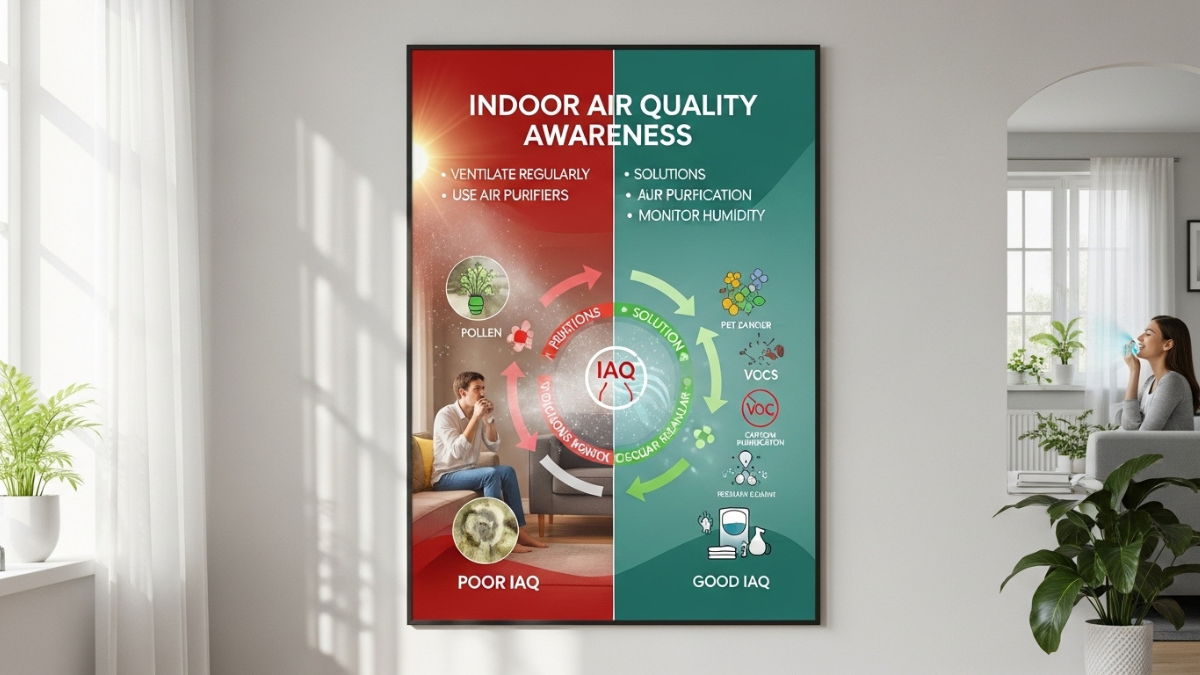
Understanding Indoor Air Quality Awareness
The indoor air quality awareness refers to the growing focus on identifying and improving the quality of air inside homes, offices, schools, and other indoor spaces. Many people assume indoor spaces are naturally safer than outdoor environments, but this is not always true.
The problem of pollution indoors often comes from common daily sources such as cooking smoke, cleaning chemicals, dust, mold, poor ventilation, and synthetic materials used in furniture or flooring. Because these pollutants are often invisible, they can be ignored for long periods.
This concern has become part of a larger health trend, where people want healthier living environments and better prevention of long-term health issues. The rise in indoor air quality awareness shows that clean air is now considered a basic part of a healthy lifestyle.
Common Sources of Pollution Indoors
The increase in pollution indoors is one of the main reasons behind stronger indoor air quality awareness. Many indoor pollutants come from everyday habits and household materials that people use regularly without noticing their long-term effects.
Some common indoor pollution sources include:
- Cooking fumes without proper kitchen ventilation
- Dust buildup from furniture, carpets, and curtains
- Mold caused by moisture and poor airflow
- Strong chemical cleaners and air fresheners
- Smoke from cigarettes or incense
- Poorly maintained air conditioning systems
These factors affect breathing comfort and overall wellness. As people learn more about these risks, the health trend toward cleaner homes becomes stronger.
Improving awareness of pollution indoors helps families make smarter choices for long-term health and comfort.
Common Indoor Pollutants and Their Effects
| Indoor Pollutant | Common Effect |
|---|---|
| Dust and Allergens | Sneezing, allergies, breathing discomfort |
| Mold and Dampness | Respiratory issues and irritation |
| Chemical Cleaners | Headaches and skin sensitivity |
| Cooking Smoke | Eye irritation and poor air freshness |
| Tobacco Smoke | Long-term lung and heart risks |
| Poor Ventilation | Fatigue and reduced oxygen flow |
This table shows why indoor air quality awareness is becoming so important. Even simple daily exposure to pollution indoors can create noticeable health effects over time.
Why Indoor Air Is Becoming a Major Health Trend
The growing health trend around indoor wellness reflects a major lifestyle shift. People are no longer focused only on visible cleanliness—they also care about the invisible quality of the environment around them.
The rise of indoor air quality awareness became stronger after more people started working from home and spending longer hours indoors. This made many individuals notice how air quality affects energy, concentration, sleep, and mood.
Concerns about pollution indoors also increased because of allergies, asthma, and seasonal respiratory issues. Families with children and elderly members are especially careful because vulnerable groups are more sensitive to poor air quality.
This health trend shows that people now connect healthy living with environment, not just diet and exercise. Cleaner air supports better focus, stronger sleep, and overall comfort.
How Better Habits Improve Indoor Air Quality
The good news is that improving indoor air quality awareness does not always require expensive equipment. Many simple daily habits can reduce pollution indoors and create healthier spaces.
Helpful habits include:
- Opening windows regularly for fresh airflow
- Using kitchen exhaust fans while cooking
- Cleaning dust-prone areas consistently
- Avoiding excessive chemical-based products
- Maintaining AC filters and ventilation systems
- Controlling moisture to prevent mold growth
These actions support the growing health trend of preventive living and make indoor spaces more comfortable for everyone.
Even small improvements can create noticeable benefits in sleep quality, breathing comfort, and daily productivity. The indoor air quality awareness movement begins with simple attention to daily surroundings.
The Role of Technology in Cleaner Indoor Spaces
Technology has also helped strengthen indoor air quality awareness by making monitoring easier and more accessible. Air purifiers, humidity monitors, smart ventilation systems, and indoor air quality sensors help people understand what they cannot see.
These tools are especially useful in areas where pollution indoors is harder to control due to climate, traffic, or building design. Families can track humidity, dust levels, and airflow more accurately.
As part of the larger health trend, these systems make prevention more practical. People are not waiting for health problems to appear—they are creating better living conditions before issues develop.
The goal is not perfect air, but healthier everyday environments that support long-term wellness.
Conclusion
The rise of indoor air quality awareness shows that health begins inside the spaces where people spend most of their time. Hidden pollution indoors can affect breathing, focus, sleep, and emotional comfort more than many people realize.
As part of a growing health trend, cleaner indoor air is becoming an essential part of modern living. From simple ventilation habits to smarter home systems, small actions can create meaningful improvements in daily well-being. The indoor air quality awareness movement reminds us that healthy living is not only about what we eat or how we exercise—it is also about the air we breathe every single day.
FAQs
What is indoor air quality awareness?
Indoor air quality awareness refers to the growing focus on understanding and improving the air inside homes, offices, and indoor spaces for better health.
What causes pollution indoors?
Common causes of pollution indoors include dust, mold, cooking smoke, chemical cleaners, poor ventilation, and smoke from cigarettes or incense.
Why is indoor air considered a health trend?
This health trend is growing because people now understand that indoor air directly affects breathing, sleep, focus, and long-term wellness.
Can poor indoor air affect sleep quality?
Yes, poor air quality and pollution indoors can lead to breathing discomfort, allergies, and interrupted sleep patterns.
How can people improve indoor air quality naturally?
Regular ventilation, reducing chemical products, cleaning dust, and controlling moisture are simple ways to improve indoor air quality awareness and healthier living.
Click here to know more.