Decision Fatigue is a subtle but powerful psychological phenomenon that affects how people think, choose, and behave throughout the day. From deciding what to wear in the morning to making complex work-related choices, the human brain is constantly required to evaluate options. Over time, this repeated decision-making leads to Mental exhaustion, reducing clarity, patience, and self-control. Many people blame themselves for poor choices or lack of motivation, without realizing that Decision Fatigue is quietly shaping their behavior. Understanding how this process works explains why even small decisions can feel overwhelming by the end of the day.
How Decision Fatigue Develops in the Brain
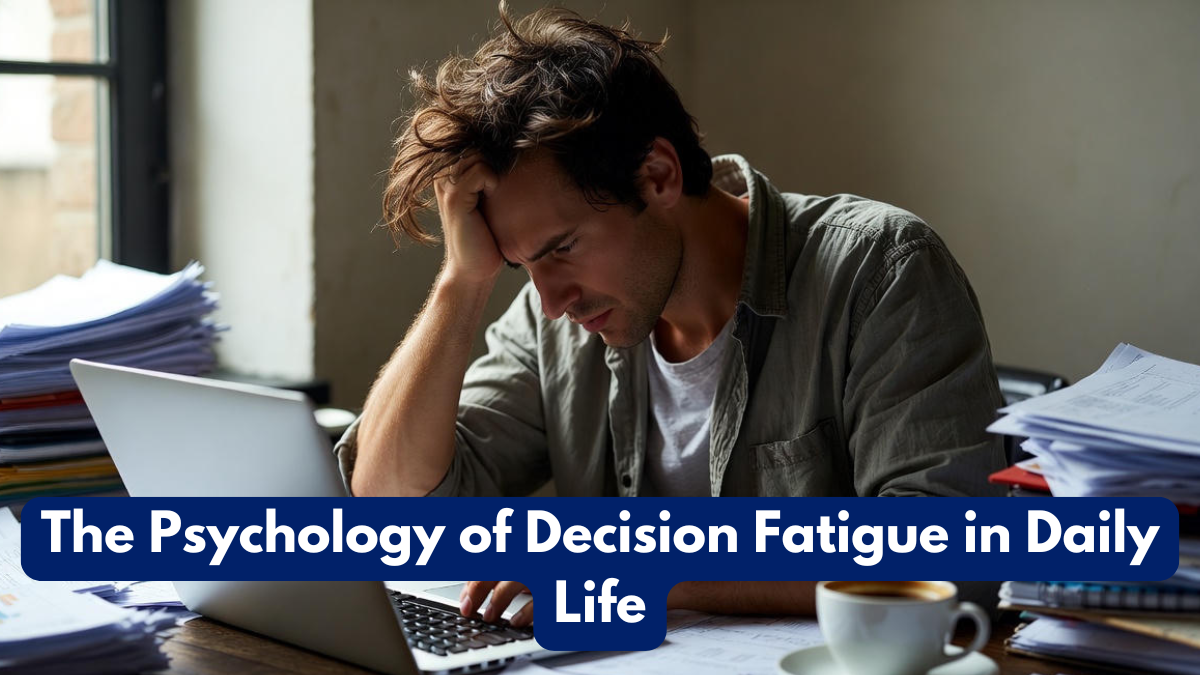
Every decision consumes cognitive energy. The brain relies on limited mental resources to weigh options, predict outcomes, and control impulses. Decision Fatigue occurs when these resources are gradually depleted. As Mental exhaustion increases, the brain seeks shortcuts, often opting for the easiest or most familiar choice rather than the best one. This is why people are more likely to procrastinate, overeat, or avoid complex decisions later in the day. The decline is not due to laziness, but to reduced cognitive capacity caused by continuous decision-making.
The Link Between Mental Exhaustion and Poor Choices
As Mental exhaustion builds, the quality of decisions declines. Decision Fatigue pushes people toward extremes, either making impulsive choices or avoiding decisions altogether. This explains why individuals may agree to things they normally would refuse, or delay important decisions unnecessarily. The brain, overwhelmed by choice overload, prioritizes relief over long-term benefit. This cycle reinforces fatigue, creating a feedback loop where poor decisions increase stress, leading to even greater Mental exhaustion.
Decision Fatigue in Everyday Life
Decision Fatigue appears in many ordinary situations, often without being recognized. Work environments, digital platforms, and modern lifestyles demand constant evaluation, contributing to chronic Mental exhaustion.
| Daily Situation | Decision Load | Effect of Decision Fatigue |
|---|---|---|
| Workplace tasks | Continuous choices | Reduced focus |
| Online shopping | Too many options | Impulsive buying |
| Meal planning | Repeated daily decisions | Defaulting to unhealthy food |
| Social commitments | Emotional decisions | Avoidance or withdrawal |
This table shows how Decision Fatigue operates across daily activities, intensifying Mental exhaustion without obvious warning signs.
Why Modern Life Increases Decision Fatigue
Modern environments dramatically amplify Decision Fatigue. Endless options, notifications, and information streams force the brain to stay in a constant state of evaluation. Mental exhaustion becomes more common because rest rarely includes true cognitive relief. Even leisure activities now involve choices, such as selecting content or managing digital interactions. This constant stimulation leaves little recovery time for mental resources, making fatigue feel permanent rather than temporary.
Managing Decision Fatigue Effectively
Reducing Decision Fatigue does not require eliminating decisions, but managing them strategically. Simplifying routines, setting defaults, and prioritizing important choices earlier in the day can significantly reduce Mental exhaustion. Creating structure allows the brain to conserve energy for decisions that truly matter. Recognizing fatigue as a cognitive limit rather than a personal failure helps people respond with self-compassion instead of frustration.
Conclusion
Decision Fatigue is an unavoidable part of daily life, but it does not have to control behavior. Caused by cumulative Mental exhaustion, it explains why decision quality declines over time and why willpower feels inconsistent. By understanding how the brain processes decisions and recognizing the signs of fatigue, individuals can design their routines to protect mental energy. Awareness of Decision Fatigue transforms confusion into clarity and allows for more intentional, sustainable decision-making.
FAQs
What is decision fatigue?
Decision Fatigue is the decline in decision quality caused by repeated decision-making and increasing Mental exhaustion.
Why do decisions feel harder later in the day?
Mental resources are gradually depleted, leading to Mental exhaustion and stronger Decision Fatigue effects.
Can decision fatigue affect emotional control?
Yes, Decision Fatigue reduces self-regulation, making emotional reactions more likely.
How can people reduce decision fatigue?
Simplifying choices, setting routines, and resting mentally can reduce Decision Fatigue and limit Mental exhaustion.
Click here to know more.